
Too Cold to Snow
I don’t recall ever being so afraid at any time in my life, and I hope to god I never am again.Still, stuck as I am now in this wheelchair, which they tell me I will almost certainly never get out of, it seems highly unlikely I could ever again manage to get myself into the sort of pickle that put me here in the first place. Which may turn out to be a mixed blessing, because having been like this for just a few weeks, it occurs to me that in a year or two I may so dread the rest of my life that I will sincerely wish for the ability to end it. Or maybe not—who’s to say? There’s plenty of folks who do this their whole lives and don’t seem any the worse for it, issues of mobility notwithstanding. Just not sure if I’m made of that kind of stuff. Expect I’ll find out soon enough though.
The true and bitter irony of this story is that it came about from nothing more than the decision to do a fellow a good turn. Someone once said those never go unpunished, and I reckon I’m living proof—more or less anyway—of the truth of that hackneyed old adage. In a roundabout way, though, it was my own dumb-ass fault, for if I hadn’t driven off that night with Don’s keys, I’d’ve had no reason to go back later on, and none of this would have come to pass.

The Deluge
“So what’s the big meeting all about?” Peter asked.
The two men stood in the office’s small third-floor kitchenette, Gabe at the counter, pouring the last half-cup of decaf from a badly-stained pot into an only slightly less stained mug, its “Earth 2.0” logo emblazoned in navy blue on the side. He set the empty carafe back on the heater with a hiss, and reached up to one of the overhead cupboards, searching for sugar packets. He found, instead, nothing but an empty bowl where the packets should have been. Fuming, he poured the half-filled cup into the sink.
“Who in the hell can drink this stuff without sugar?” he said, annoyed. “We made dozens of countries down on earth that can grow sugar, but can we get one goddam…one freakin packet of the stuff here? Sheesh…”
He rinsed the mug perfunctorily under the faucet and set it in the dish rack.
The Visit
“I shouldn’t have thought you’d be all that keen to visit a place like this, Buster, I mean what with your lofty new status and all. That was quite a piece on the news the other night.”
Alvin Cressey stood adjacent the passenger door of his Mercury Marquis, right hand resting on the upper window frame, waiting patiently as Buster Cranston slowly, methodically thrust his legs to the ground and lifted his ancient frame from the seat and into a more or less vertical position. The Marquis, a nondescript burgundy 2004 model four-door, was Cressey’s “everyday” car, the one he used when meeting or chauffeuring members of his congregation who were less than comfortable with the notion of a Protestant minister owning any of the Mercedes, Porsches, or BMWs sitting back at home in his five-car garage.
Buster, having finally levered his hundred-and-seven-year-old frame out of the seat, stepped gingerly away from the car as Cressey closed the door behind him.
Web of Murder
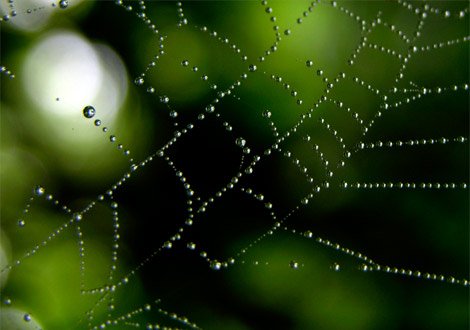
Anna thrust her key into the apartment door lock, turning it with a crisp clicking sound that reverberated through the dark empty hallway. She was still breathing heavily from climbing the stairs to her fourth-floor Manhattan walk-up. It didn’t help that she had stopped at the store on her way home from work, and was carrying a bag of groceries in addition to her backpack. She pushed open the heavy steel door with a creek, while dexterously guiding Max the cat to one side with her Reebock-clad right foot. It wouldn’t do to have him slipping out into the hallway, as none of the sixteen cats currently living in the building were allowed there according to their owners’ leases. Kicking the door shut with a thud behind her, she dropped the backpack in the corner and set the Gristede’s bag on the kitchen counter. As soon as the bag hit the counter, Max leaped up next to it and stared inquisitively at Anna.
The Test
“You’d’ve thought he’d make it home…just this once. He could have at least managed that.”
Sarah sat on the edge of the ancient living room couch, her torso leaned far forward, her face in her hands. She sobbed quietly as her Aunt Anne Marie sat by her side, one reassuring hand massaging her niece’s knee. It had just passed six in the afternoon, and the musty, high-ceilinged room still resonated slightly with the last chime of the antique mantel clock. The just-slightly-off-center ticking and resonant striking of the walnut Ingraham had been a part of the house’s rhythm for longer than anyone could remember.
“He’ll come. You just wait and see,” Anne Marie said reassuringly. “He’ll come.”
“No…he won’t. I just know he won’t!” Sarah replied in intense but muted tones through her fingers. “He said he’d come, but he won’t. That’s the worst of it, you know. He won’t just say ‘No, I can’t leave right now’ or ‘I simply don’t want to.’ He’ll agree to it, and then not make it, and he’ll have some horribly believable excuse for what kept him away, something completely out of his control. ”

The French Horn
Terry Peterson’s life has been one of non-decisions. At fifty-four, most of what he is and does and believes are the results of either decisions he has failed to make or, in a few cases, decisions someone else has made on his behalf (whether he wanted them to or not). Like, for example, his marriage, which commenced shortly after his fortieth birthday and not because of some mid-life epiphany or even any greater-than-average concern about what the neighbors might think of a forty-year-old guy living by himself. As it happened, Clinton Pendergrast was his boss at the time—an executive of that all-too-common sort who deeply, viscerally enjoys terrorizing his employees—and he (Pendergrast) had also happened to have a daughter, Renee, who needed marrying in the worst way, what with her being by then in her late thirties and showing neither prospects nor inclination to generate any, a situation the father found both unsustainable and occasionally embarrassing. And so through a complex arrangement of harmless promotions and behind-the-scenes matchmaking machinations, the pair had been introduced, Terry all but threatened into proposing, and Renee more than a little intimidated into accepting.
Suits
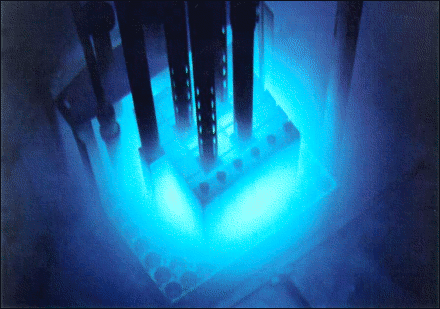
A dense cloud of highly radioactive steam billowed and swirled around the broken reactor pipefitting. The technicians before the control room’s large monitor struggled to see through the cloud, occasionally catching glimpses of the labyrinthine mass of stainless steel tubing surrounding the main vessel. The observers could also clearly hear over the intercom the piercing hiss of steam being forced out under high pressure from the fractured valve joint. The control room foreman turned for a quick glance at the radioactivity gauge in the center of the Vessel 3 control instrument cluster – thirty seven thousand rems, more than one hundred times the fatal short-term dosage for a human. As he turned back to the monitor screen, the hissing sound gradually faded out and was replaced by the steady thrumming of turbine pumps.
“That ought to just about do it,” came a hollow-sounding voice over the speakers. “Your steam pressure should be coming back up any second.”
Randy's Toe
If the sun were any brighter, fiercer, Randy would have spontaneously burst into flames and been reduced to cinders right there on the sidewalk in front of Mrs. Hendricks’ house. As it was barely two in the afternoon, he supposed he had nothing but increasing quantities of this inferno to look forward to in the coming hours, for each of which he would be compensated but seven dollars and fifty cents, scarcely sufficient to justify the apocalyptic discomfort, certainly not enough to pay for the skin grafts he felt sure would be required by the end of the week.
It was barely mid-May for Christ’s sake and already Baxter had endured twelve mind-numbing days of above-one-hundred-degree temperatures with above-ninety-percent humidity, figures that put the small Midwestern town somewhere between the Philippines and Ecuador in terms of heat index. It was a time of year when the town’s well-above-the-national-average-age denizens would normally have expected to walk around in sweaters, maybe even jackets, commiserating with each other about the failure of spring to have yet made its appearance. Instead spring had arrived this year with such insufferable vigor that most had fled either for Lake Jackson or driven to visit relatives as far north as they could be found.

Lightning Man
There comes a point in every man’s life when he realizes he is nothing, or if not nothing, then very little. Ephraim Pontoon realized this earlier than most, primarily because of the considerable help he received from his parents, who offered continuing reminders of how unlikely he was to amount to anything. It wasn’t that they hadn’t liked him as a child; they’d expended much of their parenting energy inculcating this view into all four of the Pontoon children. Ephraim, being the oldest, had simply heard it the longest, and had taken the message to heart well before entering secondary school.
Ephraim,” his father intoned over countless dinners, “the last thing this world needs is more people, particularly people like us. We Pontoons are altogether ordinary, and society is structured to ensure that ordinary people get nowhere and achieve nothing.”

Eleven
Adriana brought flowers because she knew he liked them. Bennett wasn’t gone yet, but he soon would be, and the calculating pragmatism they shared told her to bring them now, while he could still enjoy them. Chrysanthemums were his favorite and she had been fortunate to find a dozen — enormous and explosively red – at the Shop-Rite just off Chambers Street. Down just a block from the store, trudging through the gray Manhattan bitterness toward Mt. Sinai Hospital, she had been accosted by a haggard homeless woman to whom she had given one of the flowers. Even better, she had thought coming up in the elevator to the fifth floor ICU, eleven mums and a gesture for a total stranger, apt metaphor for what would soon be Bennett’s too-short life.
Consequence
As so often happens in good stories, let us start at the beginning. Later, if all goes well, we will conclude with the ending, although that outcome, as you will grow to understand, is far from certain. Indeed, there is much ground to plough in the journey between here and there. Most of the action will take place in what traditionalists would label the story’s middle. I, employing perhaps a bit more hubris than is appropriate for such a serious affair, prefer instead to regard this central bit as the plot, or if you like, the storyline. In any event, to enhance the pedagogical value of this poignant vignette, I shall periodically endeavor to expound upon key points as they occur.

Baby Doc
“Donovan,” she said, half pleading, half insisting, but looking me straight and hard in the eye the whole time, “we simply have to do it, and to hell with the laws. They’re ridiculous and anachronistic anyway.”
I had only been in the door two minutes, surprised to find she had beaten me home from work today. Normally the city records office closed at five, and she would be back in the apartment by quarter to six, more often than not one to two hours before I’d get there. Catherine spent her days issuing and tracking government identification cards, processing property tax payments, and managing a myriad of other bureaucratic processes that usually had her pretty strung out by the time she got home. At least a couple of nights a week I made a point of managing my afternoon patient load so that I could be here by five thirty, make some dinner arrangements, and get an early start on a relaxing evening for both of us. I expected to be home before her today, but a bad wreck on the freeway had added an excruciating hour to the drive. I wasn’t certain how much she’d beaten me by, but it was pretty apparent she’d been here for some time already, stewing on her favorite current issue, waiting to sucker punch me as soon as I walked in the door.
Three Thirty Two
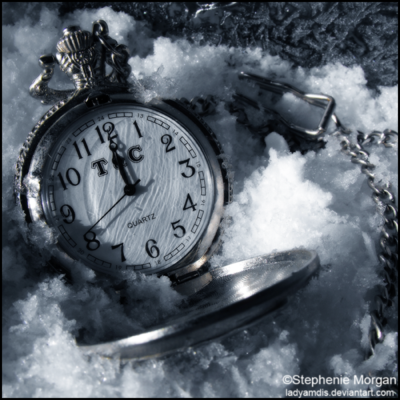
OH HELL, I say, remembering too late how much I hate days that begin with a curse. I am awake…ripped awake at three thirty two in the a.m. by a blistering crack of thunder and a tumultuous rain attacking my roof and walls. I know it’s three thirty two because the moment the thunder strikes, I burst panting from my dreamsleep and look over to the clock radio, which clearly says three thirty two. Two hours or so later I am calmer, albeit still awake, and in a disconcertingly transcendental turn of events, my clock radio still says PRECISELY-THREE-THIRTY-TWO…
…which wouldn’t be quite so disturbing if it were one of those older mechanical models with the painted numbers that flip over. With those, a power outage simply leaves the digits stranded at whatever instant in time it occurs. Thing is though, I’ve got an electronic digital clock radio, the kind with red lighted numerals. If there’s power, they remain on, inexorably increasing to mark the passage of the minutes and hours. When the power goes out, the numerals go out. End of story, QED, no problemo.
The Session
Tonight’s top story – after a month-long manhunt covering five southwestern states, alleged serial killer Shane Boswell was taken into custody early this morning at a convenience store outside Abilene, Texas. He gave himself up peacefully to two Texas State Police officers, and is now awaiting arraignment in San Antonio district court. Boswell is expected to be tried on at least nine separate counts of capital murder – cases extending from last December in Santa Fe to as recently as this month in Odessa. He is expected to plead not guilty by reason of insanity, and the San Antonio district attorney has ordered a preliminary psychiatric examination in hopes of countering this strategy.
* * *
“Shane, good morning. I’m Stan Terrence. Have a seat… We’ll be fine, officer. You can wait outside.”
“So doc, what would you like to talk about?”
“How do you mean?”
“What happens here exactly?”
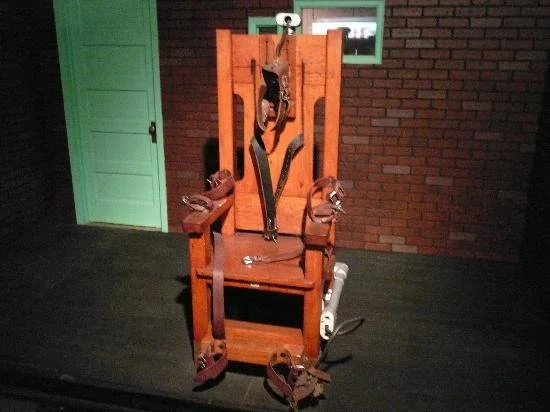
The Life of an Innocent Man
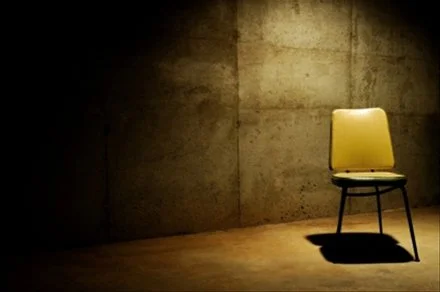
My name’s Josh Faulkner and I’m sittin’ here in a hard oak chair at Huntsville prison, waitin’ on my pa to come and pick me up. This chair they set me in to wait is pretty unusual, now that I get to lookin’ at it good. In fact, I ain’t never seen one quite like it. My Uncle John used to build chairs once in a while, but they was always thin and light, and the wood was golden and smooth as a baby’s backside. My mom used to love them chairs too – even had some of ‘em in our kitchen a long time ago.
But this one here ain’t nothin’ like what my Uncle John used to make. This one’s real big and heavy and rough. It sure ain’t made for sittin’ comfortable’s what I mean – not a place I’d care to spend a long time anyhow. For one thing it’s stuck down to the floor with big black iron bolts. Almost seems like the prison’s worried someone’s gonna’ up and make off with it, although who’d wanna’ do that I can’t hardly say. And to be honest, it ain’t all that good lookin’ a chair, so why somebody’d want to run off with it in the first place ain’t real clear. It’s kinda’ blocky I guess is the only way to really explain it – almost like it was built outa’ railroad ties. And it looks real old too, like it ain’t been outa’ this little room its whole life.
Taking Care of Things
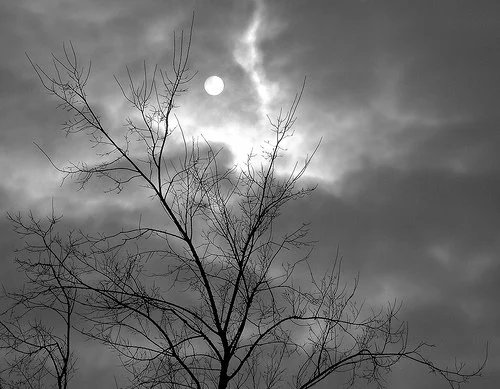
The day after it happened, I awaken to find the bedroom window slightly ajar, the narrow gap admitting, like jelly oozing from the far edge of a child’s sandwich, the distant melancholy croak of a morning jay. And through the wavering glass panes, to whose dust and grime I have already grown accustomed, there struggle beams of sunlight, not in that abundant all enlightening fashion that embraces morning people, but rather in individual streams, each gasping to find its own path through the relentlessly advancing opacity of decades, and each bearing with it a cargo of motes and other weightless impurities that dance and swirl with grace belying the utter lack of circulation in the room. Slowly, like burglars, a select few of these rays creep across the worn pine plank floor and up the side of the painfully plain and narrow bed. They carve their stealthy path across the disheveled collection of blankets and sheets that I have cast about in my fitful sleep. Ineluctably the most tenacious of the rays then crawl with furtive silence up my bare legs, their scarce discernible autumnal warmth insufficient to stir me.
Red Nearly Loses It
I’m telling you if he fires up that goddamn French horn one more time so help me I am going to personally walk over there and stuff it up his ass. We’ll see what kind of noises he can make on it then, by God. Couldn’t be any worse.
Now Red, what other way could you do something like that that besides personally?
Don’t you give me none of your uppity lip. Save it for those second graders of yours. You know damned good and well what I mean. It wouldn’t be so bad if the kid had a lick of ability on the thing but Jesus H. Christ, what’s it been—three years—since Peterson bought him that thing and hell if it don’t still sound like a cat being fed through a wood chipper every time he touches it. Shit, give the boy a job as some kind of fire alarm or early warning system. At least then he’d be doing this neighborhood a favor instead of making people claw their hair out night after night.

Homecoming
Turns out the global warming crowd was right, but for entirely the wrong reason. Truth of the matter is it never had anything to do with carbon dioxide or greenhouse effects or any of that crap. It was just the engine coming on-line.
All I remember is one minute I was sitting there on the couch, snarfin’ a bag of Doritos and watching the game on ESPN. Next thing I know, one of those Breaking News things comes marching across my screen just as Bagwell is about to come up to bat with the bases loaded and only one out. This had better be damned good, I’m thinking, but I honestly expected it to be just another plane crash, or civil war in Botswana, or some other crisis about which I could care diddly-shit. Well, for a change they came up with one that even I found captivating and relevant.

Endicott Lake
I’m Bud, and I live in Endicott Village, which is this no-account little town up in northern Vermont where not one goddamn thing ever happens. Years ago they’d have called it a one-horse town, except we ain’t got no horses I ever saw. Truth is, I been meaning to get my skinny ass (ma’s words) out of this place for ages. Only it ain’t that simple, on account of Mirabelle.
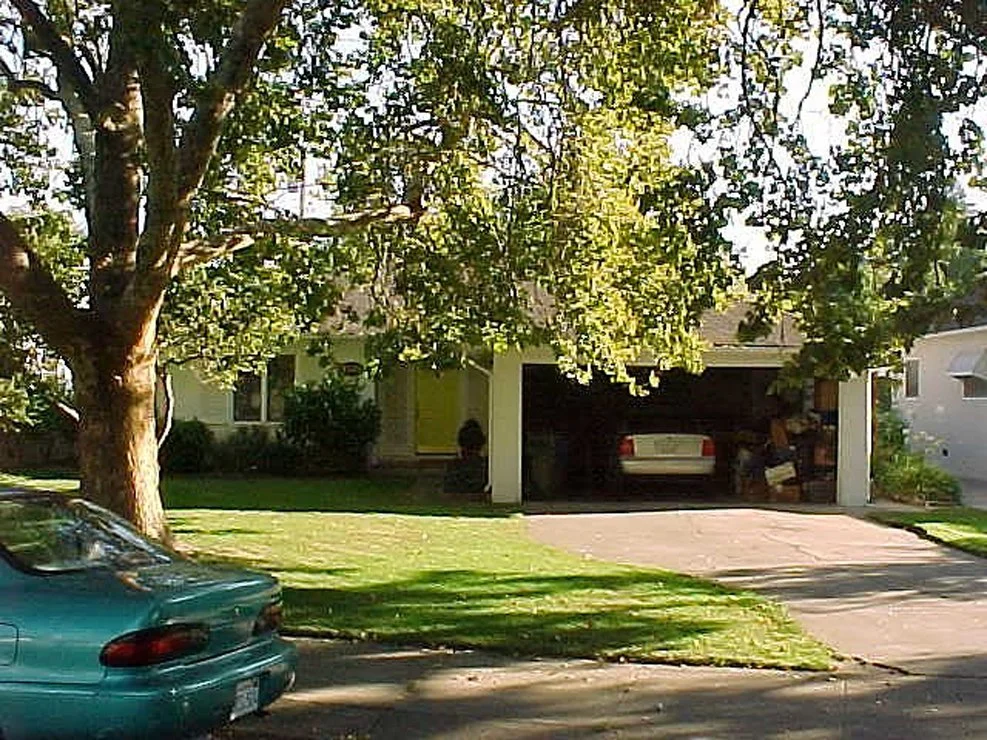
She’s this girl who used to live a little ways down the road from us when we were growing up. I guess you could say we really spent a lot of time hanging out together back in them days. Now we only manage to get together once in a while, but I really like talking to her whenever I can. I still drop in on her mom once in a while too, seeing as how she pretty near helped raise me and all. Hell, I used to go visit their house practically every day when I was a kid. It’s not much of a walk down there at all. In fact, I can still see their old house from my bedroom window if it’s winter and the leaves are off the trees.

Convergence
Hanan had already arrived. As Avi walked through the front door into the restaurant, he glanced about uneasily, eventually locating the man he had agreed to see. The two had never met before this evening, and they were, even now, separated by more than thirty feet. Still, Avi had no doubt this was the man. Hanan was sitting alone in a booth in the dim light of the back corner, motionless, staring straight ahead into the empty seat across from him. Avi remained for a moment just inside the door, nervously wiping a bead of sweat from his forehead as he surveyed the newly rebuilt establishment. Warm oak wainscoting surrounded the roomful of matching tables and arch-back chairs. A half-dozen ceiling fans swung slowly and silently overhead, making invisible eddies in the warm humid evening air. The large open room was decorated with brass railings and potted palms, and along the walls hung original abstract paintings by local Israeli artists.